Home renovation is one of those things that can genuinely pay off, but only if you actually sit down and plan it properly. If you skip the planning part, you’re pretty much asking for blown budgets, missed deadlines and a fair bit of stress you didn’t need. So if you’re trying to figure out how to plan a home renovation properly, here’s the process broken down into steps you can actually follow through 2026.
Doesn’t matter if it’s one room, kitchen, bathroom or the whole house, the same rules apply to all. Know what you want, have a clear idea about the budget, take a look into approvals at the earliest, and leave room for custom alterations and designs that meet your aesthetics.
Why Planning a Home Renovation Matters?
A home renovation touches every part of daily life: your budget, your schedule, and sometimes even where you sleep at night. Homeowners who skip the planning stage are far more likely to face cost blowouts, delayed permits, and design decisions they later regret. On the other hand, a well planned renovation protects your investment, keeps your project on schedule, and ensures the finished result actually suits how you live.
If you’re comparing a renovation against other options, it’s also worth reading our comparison on knock down rebuild vs renovation in Canberra to confirm renovating is the right path for your property.
Checklist for Home Renovations: Step by Step Process
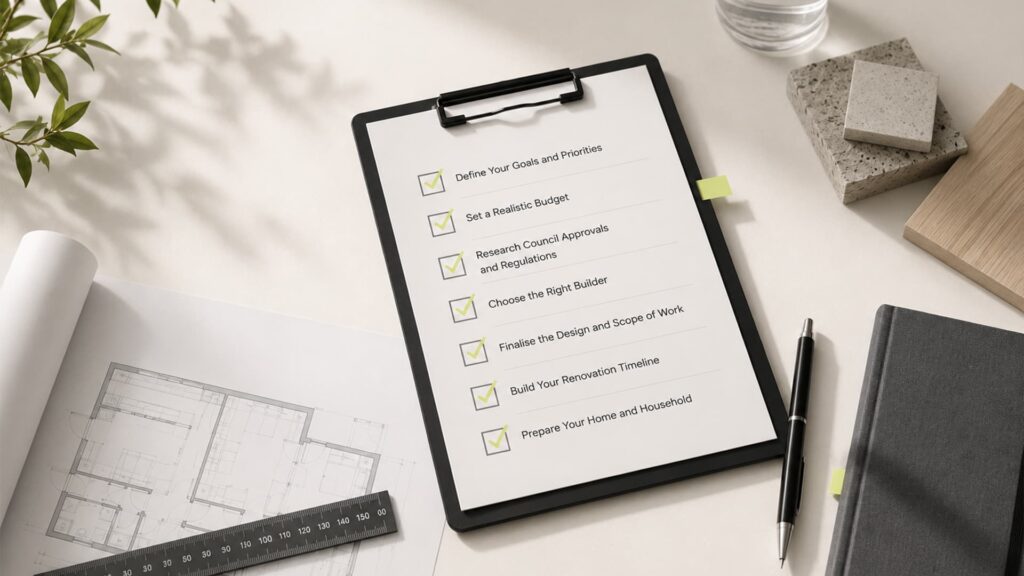
Use this checklist for home renovations as your roadmap from first idea to final handover.
1. Define Your Goals and Priorities
First question: why are you doing a home renovation?
More space for the kids, boosting resale value, or just tired of looking at the same weary design?
Write down your must-haves and keep them separate from your nice-to-haves. Sounds obvious, but this list becomes genuinely important later when the budget starts squeezing decisions.
2. Set a Realistic Budget
Everything flows from this number. Break it down properly – design, materials, labour, permits, finishes – and don’t skip the contingency. Add 10-20% on top for the stuff you can’t see coming, because opening up a wall has a funny way of revealing plumbing or structural surprises nobody warned you about.
3. Research Council Approvals and Regulations
In Canberra and the ACT, many renovations require development or building approval before work can begin, particularly if you’re changing the structure, footprint, or use of a space. Skipping this step can lead to costly delays or having to redo completed work. Our guide to council approval for renovations, rebuilds and new homes in the ACT explains what’s typically required.
4. Choose the Right Builder
Your builder shapes the entire renovation experience. Look for a team with local knowledge, transparent pricing, and a track record of quality workmanship. Abode Constructions’ House Renovations service is built around exactly this: honest guidance and craftsmanship suited to Australian conditions.
5. Finalise the Design and Scope of Work
Once you’ve got a builder, nail down the details — layout, materials, fixtures, finishes, all of it. The clearer your plans, the less chance of expensive changes mid-project, and it means your contractor can actually quote accurately instead of guessing.
6. Build Your Renovation Timeline
Work backwards from your ideal completion date, allowing time for design, approvals, material lead times, and construction. If your project includes adding square footage, our house extensions service and related guide on planning a home extension in Australia outline additional timeline considerations.
7. Prepare Your Home and Household
Before demolition begins, clear the spaces being renovated, arrange alternative living arrangements if needed, and document the existing condition of your home with photos.
How to Plan a Home Renovation Timeline?
A realistic home renovation timeline typically includes the following phases:
- Planning and Design: 4 to 8 weeks
- Council Approvals: 4 to 12 weeks, depending on the scope of work
- Material Ordering and Lead Times: Varies depending on product availability
- Construction: Several weeks to several months, depending on the size and complexity of the project
- Final Inspections and Handover: Typically completed once construction is finished
Tip: Allow extra time in your schedule for unexpected site conditions, weather delays, or material supply issues, as these can affect the overall timeline.
Common Home Renovation Mistakes to Avoid
- Designing before the budget’s actually locked in
- Underestimating the hidden costs — permits, temporary housing, structural surprises
- Starting work before approvals come through
- Picking a builder purely on price rather than reputation and how well they communicate
- Not thinking past how the space looks to how it’ll actually be used long-term
Frequently Asked Questions
How long does it take to plan a home renovation?
Most people spend 2 to 4 months on planning before the build starts — design, budgeting, council approvals, the lot. Bigger projects or ones needing development approval in the ACT can run longer.
How much should I budget for unexpected costs?
Most industry experts recommend setting aside 10 to 20% of your total renovation budget as a contingency fund for unforeseen issues.
Do I need council approval to renovate in the ACT?
Depends what you’re doing. Purely cosmetic changes, like painting or like for like fixture swaps, usually do not need approval. Structural changes, like moving walls or altering the footprint, generally do, and sometimes you’ll need development approval on top. Worth confirming with your builder or Access Canberra before you start anything.
Should I hire a builder or do it myself?
For anything structural, plumbing, electrical, or requiring permits — get a licensed builder involved, full stop. DIY’s fine for smaller cosmetic jobs, but leave the rest to the pros.
Ready to Start Planning Your Renovation?
A well planned renovation is the foundation of a stress free build. If you’re ready to turn your renovation plans into reality, get in touch with Abode Constructions, Canberra’s trusted, family owned home builders with over 30 years of experience delivering quality renovations, extensions, and custom builds.